Contents
Household Goods & Textiles Cleaning
Clothing, bedding, upholstery and keepsakes cleaned of soot, smoke and water, with an inventory so nothing disappears into a box.
Why the smell stays when the wash doesn't fix it
A closet that never touched flame can still hold a whole winter of smoke. Clothing, bedding, drapery, rugs and upholstered furniture are porous, so smoke and soot particles settle into the fibers rather than sitting on top of them. Owners run a sweater through the wash three times and it still smells on the fourth, then wonder if they're imagining it. They aren't. Ordinary laundering lifts the loose particles and leaves the ones that bonded to the fiber, and the heat of a dryer can set that odor in for good.
Water does its own damage to the same things. A mattress that took firefighting water or a plumbing leak won't dry out on its own, and a wet sofa cushion sours from the inside while the cover feels fine. Some contents can't be wiped at all: leather, photographs, electronics, books, papers and anything with a finish that reacts to moisture. Those need a different method, and a few need to be told honestly that the answer is no.
That sorting is the real work of contents cleaning: what can be cleaned, what needs specialist handling and what is gone. A Fort Lee apartment that took smoke from the unit next door has the same problem as the one that burned, because the contents carry it either way.
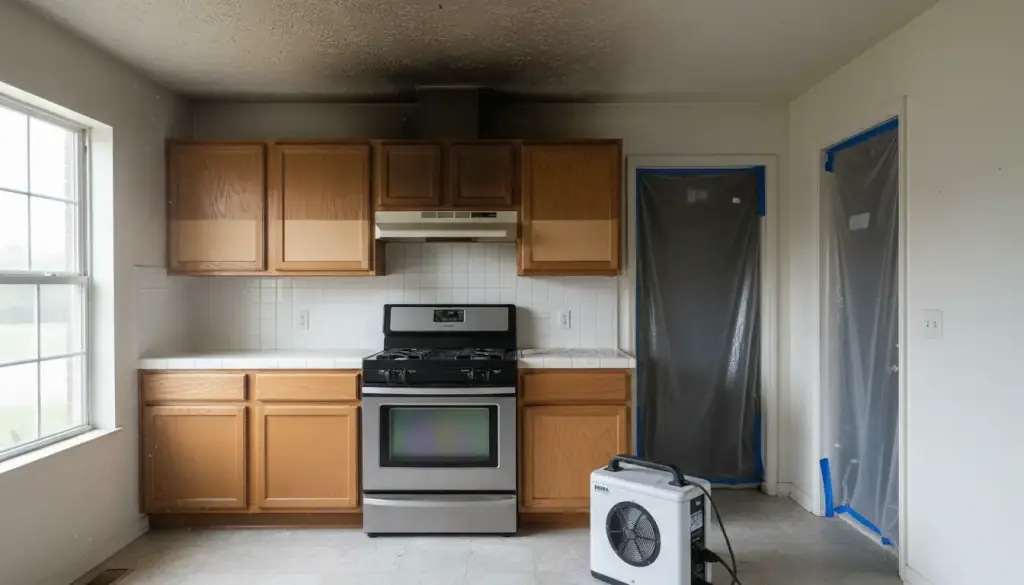
Kitchen with soot spread across the ceiling above the range, doorways sealed in plastic and an air scrubber on the floor
Inventory, pack-out and the methods behind them
Contents work starts the way the structure work does, with Triage. Before anything leaves the house it's photographed and listed room by room, so there's one record of what was there and what shape it was in. That inventory is what your insurance reviews, and it's also what keeps a box of wedding photos from turning into a line that says only bedroom, misc. Pack-out then moves the contents to a clean space, so the walls and floors can be cleaned and dried without working around your furniture.
Mitigate, for contents, means separating by material and by how far the damage went. Hard goods are HEPA vacuumed and cleaned with chemistry matched to the surface. Textiles are sorted by fiber, since wool, silk, cotton and synthetics don't tolerate the same processes, and each goes down the launder or dry-clean route that suits it. Where odor sits deep in soft goods, thermal fogging, or ozone or hydroxyl treatment, can be used in a controlled space with nobody inside.
Restore is the return. Cleaned items come back checked against the inventory and set where they belong. Back Safe & Sound means the closets and drawers hold what they held before, minus the smoke. The work is run by IICRC Certified Restoration Technicians, and the hotline, (201) 204-9700, has technicians available 24/7.
What gets kept, what gets let go, and how the claim sees it
Some things aren't worth the cost of cleaning, and an insurance claim treats cleaning and replacement differently, so the decision is yours with real information behind it. A twenty-year-old polyester curtain may cost more to restore than to replace. A wool coat, a wedding dress or a family quilt is a different conversation. We'll tell you where each item falls and why, and then it gets documented.
We work directly with your insurance, and the inventory is built to be read by an adjuster. We've also partnered with a seasoned public adjuster who assesses the damage right after you call. Odor is checked on the cleaned goods before they come home to you, not after, and estimates are always free.
If you aren't sure a pile of clothing is worth the effort, ask before you throw it out or run it through the dryer. Once heat has set smoke into a fabric, the options narrow quickly, and anywhere in New Jersey that's a call worth making early.
Strategic Source — Call (201) 204-9700.
Have a room full of belongings and no idea where to start? Describe it on the contact page and we’ll tell you what we’d look at first.