Storm lane
24/7 Storm Damage Restoration
Roof and window breaches tarped and boarded, then the inside dried out.
Where a storm gets in, and what it does once it's inside
A storm rarely damages a building in one place. Wind lifts shingles or strips a section of roof, a branch or a whole tree comes down through the roofline, a window gives way, and rain driven sideways finds the gaps around frames, vents and flashing. The opening you can see is only where the water started.
Once it's in, it behaves like any other water loss, only faster and in more places at once. Rain soaks the attic insulation, which holds it and drips it down through the ceiling drywall. A ceiling that has started to sag or bulge is carrying a load of water, so stay out from under it and call. The wall below takes on the moisture next, and then the floor.
Power loss is the second problem. A sump pump goes quiet when the lights go out, and a basement that was fine at noon can have standing water by night. Across New Jersey, a hard nor'easter can leave a house with a wet attic, a wet basement and no electricity, all in one night.
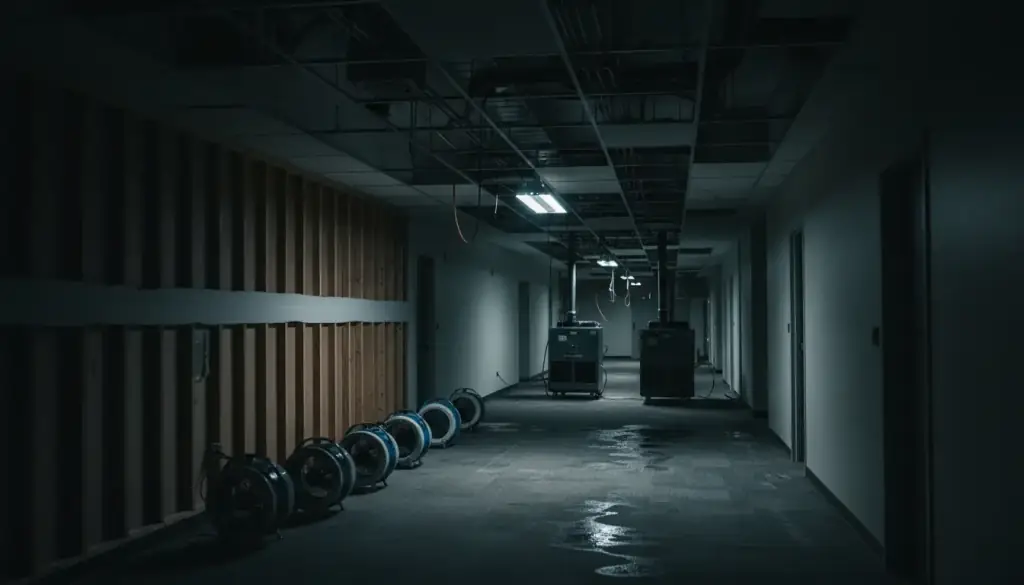
Commercial office corridor drying at night: a line of air movers, two dehumidifiers, drywall cut away and ceiling tiles out
Stopping the weather first: tarps, board-up, then the dry-out
Triage runs on the 24/7 hotline, because storms don't wait for office hours. Within minutes of your call our team responds and is ready to work. The first job on a storm loss is closing the building to the weather, so the rain stops being the thing that is causing the damage.
Mitigate means emergency tarping over the roof breach and board-up over broken windows and doors, so no more rain comes in while the inside is dealt with. Then the water is dealt with the way it is on any loss: extraction of what is standing, moisture meters and thermal imaging to find the wet ceiling, wall and floor assemblies, wet insulation pulled out, and antimicrobial applied to the open cavities.
Restore is the drying. LGR dehumidifiers and air movers go in, sized to the affected rooms, and our IICRC Certified Restoration Technicians return to check the readings and move the equipment. Back Safe & Sound means the building is dry, closed and ready for the roofer, the glazier and the carpenter to finish the permanent repair.
Storm prep, insurance and what to photograph
Take photographs of the damage before anything is moved, if it is safe to do so: the opening, the wet ceiling, the tree, the water line. Keep the receipts for anything you spend to protect the property. Strategic Source works directly with your insurance, and records of the damage and what was done about it make that conversation shorter.
We've also partnered with a seasoned public adjuster who assesses the damage right after you call, so you have someone looking at the claim from the first day. Estimates are always free, and that holds for a home in Fort Lee, a commercial corridor or a building anywhere in New Jersey.
The best storm damage is the damage that doesn't happen. Our blog has a plain-language checklist, Hurricane and Storm Prep Tips for New Jersey Homeowners, covering sump pumps, gutters and what to document before the forecast turns. It's linked below this page.
“The technician showed up at my house within 30 minutes.” Kathy D., Hackensack, NJ.
Read Hurricane and Storm Prep Tips on our blog before the next forecast. If the storm has already come through, call the hotline, or describe what it did on our contact page and we’ll call you back.