Water lane
Water Damage Restoration
Burst pipes, overflowing fixtures and roof leaks, extracted and dried down to the studs.
What a burst pipe does behind the wall you can see
The stain on the ceiling or the puddle by the dishwasher is the small part of the loss. Drywall pulls water upward like a wick, often a foot or more above the line you can see, and the paper facing holds that moisture long after the surface feels dry to the hand. Inside the wall, wet insulation presses against the studs and the bottom plate and keeps them damp for weeks.
Underneath, water travels through the seams of the subfloor and soaks the plywood from the edges in. Hardwood drinks it from below, and the first sign is cupping: the boards curl up at their edges because the underside is wetter than the top. That means moisture is already moving through the plank, and a floor that looks only slightly wavy can be soaked through.
In a Fort Lee condo, the water that finds the ceiling light fixture below you is a second loss in a second unit. Warm, damp, closed-up material is where mold gets its start, so the clock on a water loss is measured in hours, not in the days it takes the stain to spread.
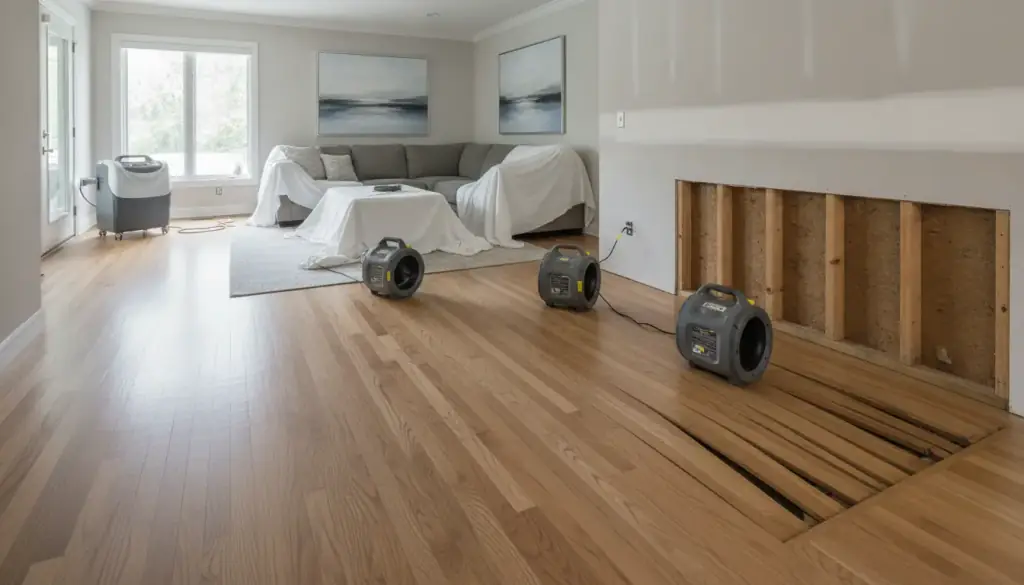
Family room after a burst pipe: cupped hardwood, a flood cut along the drywall and air movers drying the wall
How we work a water loss: Triage, Mitigate, Restore, Back Safe & Sound
Triage starts on the 24/7 hotline. Within minutes of your call our team responds and is ready to work, and the first questions are practical: where is the water coming from, can it be shut off, and what in the house is still safe to leave energized. A technician protects the floors and furniture in the path before any equipment comes through the door.
Mitigate is where the damage actually stops growing. Extractors pull standing water off the floor and out of the carpet, then moisture meters and thermal imaging map where the water went instead of leaving us to guess. We pull baseboards, make flood cuts in the drywall above the wick line, and remove wet insulation and padding that can't be dried in place. Antimicrobial goes onto the open cavities before anything is closed back up.
Restore means drying the structure itself. LGR dehumidifiers pull the moisture out of the air while air movers push dry air along the walls and across the floor, set by the size of the affected area rather than by habit. Our IICRC Certified Restoration Technicians come back each day, read the meters again and move the equipment to where the readings are still high. Back Safe & Sound comes when the numbers say the structure is dry.
Drying goals, mold risk and the insurance call
Dry is a measurement, not a feeling. We compare readings on the wet materials with readings on unaffected materials in the same home, and the job isn't finished until they match. Fans that ran for a set number of days don't prove anything. The meter does.
Skipping that verification is how a water loss turns into a mold loss. Moisture left inside a wall cavity or under a floor feeds growth you can't see until a smell, a stain or a lifting board shows it weeks later. If that has already happened in your house, our mold remediation team works under containment, and the lane page for it is linked below.
On the insurance side, we work directly with your insurance. We've also partnered with a seasoned public adjuster who assesses the damage right after you call, so you aren't left alone with the claim. Our meter logs and photos from each visit give the adjuster a record of what the water did. Estimates are always free, anywhere we work in New Jersey.
“They brought in their equipment after laying down floor covering to protect my floors and the surrounding area.” Melissa H., Toms River, NJ.
If water is still running, call the hotline first. If it has stopped and you want to know what it did, you can describe the damage on our contact page and we’ll call you back to set a time to look at it.