Mold lane
Mold Remediation
Growth sealed inside containment, removed under negative air with HEPA scrubbing, and the moisture that fed it found and corrected, for homes and businesses from Fort Lee across New Jersey.
Why bleach and a fan don't end a mold problem
Mold rarely shows up where the wall is wet. What you notice is a musty smell that comes and goes, a stain creeping up the baseboard, paint that bubbles, or a basement corner that always feels damp. Behind those signs, drywall paper, insulation and framing can hold moisture long after the surface looks dry.
That's why regrowth after a cleanup is so common. Wiping the visible patch with bleach or a store-bought spray treats the surface and leaves the porous material underneath, along with the leak or condensation that fed it. A few weeks later the stain is back, because nothing about the conditions changed.
In a New Jersey basement the story is usually the one Kevin L. told from Vernon: a pipe burst over the winter, three feet of standing water, and mold in everything that stayed wet afterward. The water was the first problem. The mold is what the water left behind.
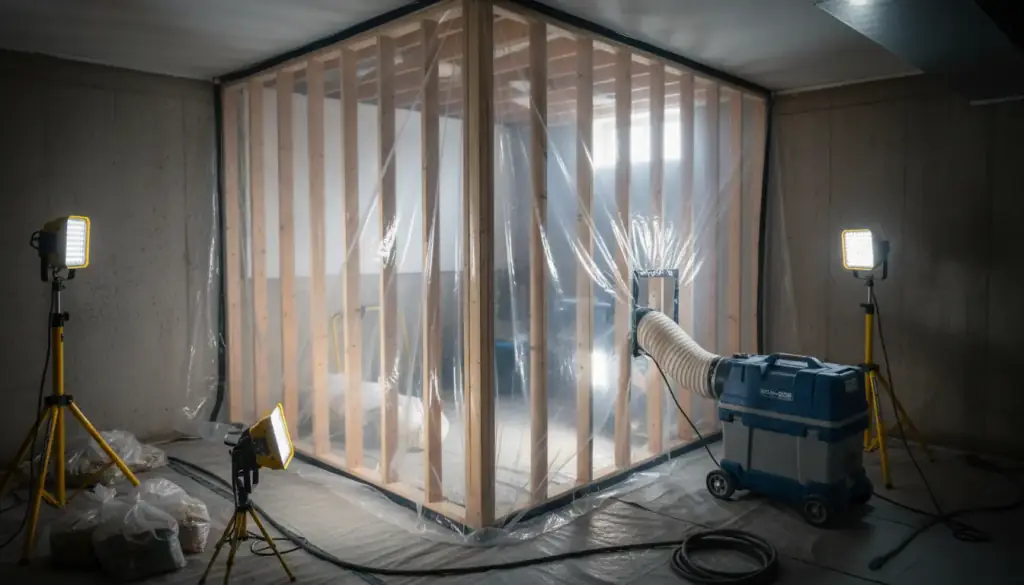
Basement mold containment: clear plastic sealed around cleaned studs with a HEPA air scrubber ducted out of the chamber and work lights on
Containment, negative air and a clean-down, in four steps
Triage starts with the 24/7 hotline at (201) 204-9700. Within minutes of your call the team responds, and the first job is mapping how far the growth and the moisture actually run, because the two don't always match.
Mitigate means sealing the work area before anyone cuts anything. Clear plastic goes up around the affected studs and walls with a zippered door, and HEPA air scrubbers hold the chamber under negative air, so air is pulled in through the door and filtered out of the chamber instead of carrying spores through the rest of the house.
Restore is the cleanup itself. Affected porous materials such as drywall and insulation are cut out and bagged inside the containment. The framing is cleaned, then every surface gets a HEPA vacuum and a damp wipe. Alongside that, the moisture source is corrected, whether that's a leak, a failed drain or a wet wall. IICRC Certified Restoration Technicians do this work, and Back Safe & Sound is the last step, not an afterthought.
Dry before it's closed, and who deals with the insurer
Before any wall gets closed back up, the framing and whatever materials remain have to read dry, and the moisture source has to be fixed for good. Closing drywall over damp studs just starts the same problem again behind a fresh coat of paint.
Strategic Source works directly with your insurance, and has partnered with a public adjuster who assesses the damage right after your call. What a policy covers for mold differs from one policy to the next, so it pays to ask early. Estimates are always free, and every job is backed by a 100% satisfaction guarantee.
Kevin L. of Vernon, NJ put it this way: "There was a lot to clean up with all the mold but they cleaned everything out so fast."
Strategic Source — Call (201) 204-9700.
If a wet wall was only dried and never opened, or the smell came back after a cleanup, tell us what you're seeing on the contact page. A mold problem that started with water often needs the water damage work finished properly first.