Burst Pipe or Flooded Basement: What to Do in the First Hour
The first sixty minutes decide how much of your home you keep, so here is the order to work in.
October 20, 2026 · 4 min read
A pipe lets go at two in the morning, or you walk down to the basement and your shoes are wet before you reach the bottom step. The first hour decides a lot. Water doesn't sit politely where it landed. It wicks up drywall, soaks into subfloors, and finds its way into wall cavities you can't see. Here's what to do, in order, and what to leave alone until help arrives.
Stop the water first
Find the main shut-off valve and close it. In most New Jersey homes it sits near where the water line enters the house, often in the basement, a utility closet, or beside the water heater. Turn it clockwise until it stops. If you don't know where it is, find out this week, before you need it. If the leak is on a single fixture, a small valve under the sink or behind the toilet may be enough, but when in doubt, shut off the main.
Once the water is off, open a faucet on the lowest floor and another on the highest to drain what's left in the lines. That cuts down how much more comes out of the break.
Treat water and electricity as a dangerous pair
This is the step people rush past. If water is reaching outlets, power strips, appliances, or the electrical panel, don't wade in. Standing water can carry current from a live circuit, and you can't tell by looking.
- If the panel is dry and you can reach it without stepping in water, switch off the breakers for the affected rooms, or the main breaker.
- If the panel itself is wet, or water is deep around it, stay out and call your utility or an electrician.
- Don't plug in or unplug anything that's sitting in or near the water.
- Don't run a regular vacuum or drag an extension cord through wet areas.
If you smell gas or see sparking, leave the house and call 911 from outside.
Take photos and video before you move anything
Your insurer will want proof of what the damage looked like when you found it. Walk the affected area with your phone and shoot video, then take stills of the source of the leak, the waterline on the walls, wet floors and ceilings, and any furniture, rugs, electronics, or boxes that got soaked.
Then jot down a rough list of what was affected: the room, the item, roughly how old it is. It doesn't have to be perfect. A quick list written while it's fresh beats a long one rebuilt a week later. Keep any broken pipe section or failed part if you can, since an adjuster may want to see it. Check your policy for what it covers and for any notice requirements, and ask your insurer directly if the wording isn't clear.
Why standing water and wet drywall get worse by the hour
Water damage isn't a single event. It's a process that keeps going while you wait. In the first hours, water spreads through every porous material it touches. Drywall acts like a wick and pulls moisture up several inches above the visible waterline. Baseboards swell, hardwood starts to cup, and carpet padding holds water like a sponge against the subfloor.
Over the next day or two, the moisture hangs in the air and condenses on cooler surfaces. The paper face on drywall stays wet and softens. Metal fasteners can start to rust. Mold can begin to grow on damp organic material in as little as a day or two under the right conditions. That's general restoration experience, not a promise about any particular house, but it's the reason crews push to start drying fast.
What you can safely do while you wait
- Move small items, shoes, and boxes off wet floors onto dry, raised surfaces, as long as the area is safe to enter.
- Pull up area rugs and set furniture legs on foil or plastic blocks so wood and fabric don't stain.
- Mop or squeegee shallow water toward a floor drain, but only with the power off and only if you're not standing in deep water.
What to leave alone
Don't try to dry a wall by cranking the heat, since that can push moisture deeper and help mold along. Don't pull up carpet or cut into drywall yourself until you know what's behind it and whether the water was clean. Don't throw out damaged materials before they've been photographed and your insurer has had a chance to weigh in. And don't wait to see if it dries on its own. A surface that feels dry to the touch can still hold moisture in the cavity behind it.
What a professional crew does next
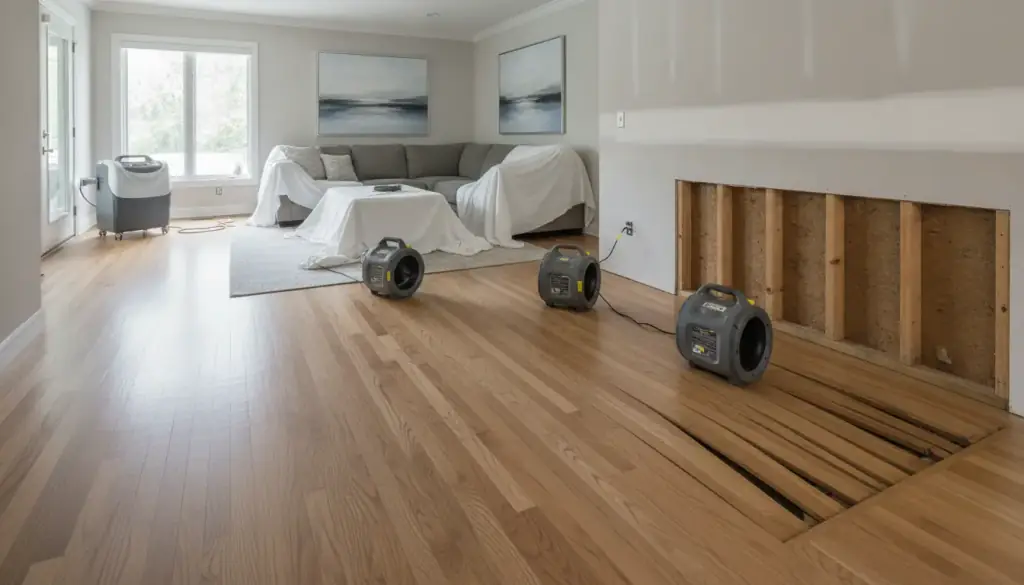
A restoration team starts by finding where the water actually went, not just where you can see it. Moisture meters and thermal cameras show wet material behind finished surfaces. Then comes extraction of standing water, removal of whatever can't be saved, and drying with air movers and dehumidifiers until the readings come back to normal.
Strategic Source works in four steps: Triage, Mitigate, Restore, and Back Safe & Sound. The first step is getting a technician to you quickly. Kathy D. of Hackensack said it in her own words: 'The technician showed up at my house within 30 minutes.' Every job is different, and we won't promise a clock, but speed is the whole point of the first step.
Our emergency line at (201) 204-9700 is answered 24/7. If you're standing in water right now, call, any hour. Estimates are always free, and we work directly with your insurance.
Strategic Source, (201) 204-9700
Call (201) 204-9700More articles
Hurricane and Storm Prep Tips for New Jersey Homeowners
A checklist you can finish in an afternoon, before the forecast turns.
Why a Small Kitchen Fire Leaves Smoke and Soot Through the Whole House
The flames were small, but smoke travels, and the cleanup starts with what you don't do.