Why a Small Kitchen Fire Leaves Smoke and Soot Through the Whole House
The flames were small, but smoke travels, and the cleanup starts with what you don't do.
October 20, 2026 · 4 min read
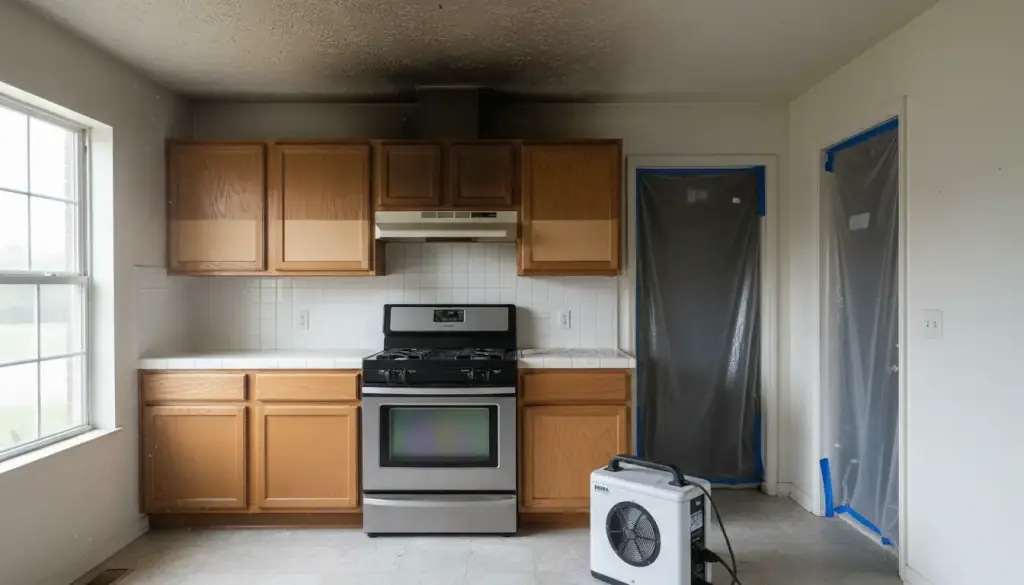
A pan of oil flares up, you smother it with a lid, the smoke alarm quits, and the fire is out in two minutes. The kitchen looks fine apart from a scorched patch above the stove. So why does the whole house smell like a campfire the next morning, and why is there a gray film on a shelf two rooms away? Because the fire was small. The smoke wasn't.
Smoke is mostly tiny particles, and they travel
Smoke is a mix of gases and extremely fine particles, and it moves wherever air moves. Heat pushes it up and out of the kitchen. Pressure differences and the home's heating and cooling system carry it further, through doorways, ceiling gaps, wall cavities, and ductwork. It settles on walls, ceilings, upholstery, curtains, and inside closed cabinets.
The particles are small enough to work into the pores of painted drywall, unfinished wood, and fabric, and the odor goes in with them. That's why a fire that never left the stovetop can still reach a bedroom at the other end of the hall.
Not all soot is the same
Restoration crews sort residue into types, because each one cleans differently.
- Dry soot comes from fast, hot fires burning paper or wood. It's powdery and comes off with the right dry method, but it smears easily.
- Wet or smeary soot comes from slow, low-heat fires, often involving plastics or rubber. It's sticky and spreads into long streaks.
- Protein residue is the kitchen fire special. Burnt food leaves an almost invisible greasy film with a strong smell, and over time it can discolor paint and varnish.
A professional identifies which type is present before cleaning anything, because using the wrong method is how a fixable room becomes a repaint-and-replace job.
Why wiping it yourself can set the stain
The instinct is to grab a wet rag and a household cleaner. With dry soot, that's the worst move. Water and pressure push the fine particles into the surface, and the oils from your skin and the cleaner itself can bind them there. A gray smudge becomes a stain that needs sealing primer instead of a cleaning pass. Painted walls, grout, unsealed wood, and fabric are the usual victims.
Until someone has assessed the damage, hold off on these:
- Wiping or scrubbing walls, ceilings, or appliances with a damp cloth.
- Running the furnace or air conditioning, which can pull soot into the ducts.
- Using a regular vacuum, which can blow the finest particles back into the air.
- Turning on ceiling fans or throwing every window open to push smoke around.
- Washing smoke-exposed clothes, curtains, or bedding with the rest of the laundry.
- Using food and cookware that were out in the kitchen before they've been checked and cleaned.
- Tossing damaged items before you've photographed them.
The smell is a separate problem
Odor is the part people underestimate. You can clean a wall until it looks right and still have a house that smells like smoke on every humid day. That's because smoke particles sit in porous materials and in places you can't see, such as insulation, wall cavities, and the backs of cabinets.
Restoration crews deal with it in order. They remove the residue first, then clean surfaces with products matched to the soot type, run HEPA air scrubbers to pull particles out of the air, and seal surfaces where it's needed. Masking the smell with sprays or candles only hides it for a day.
Check for water damage too
Putting out a fire often means water, whether it comes from an extinguisher, a hose, or a sprinkler. That water soaks into floors and walls, and it runs on the same clock as any other water loss. If anything got wet, drying has to start quickly. It's also worth having the fire department or an electrician confirm that the wiring and appliances near the fire are safe to use.
What to do in the first day
- Make sure everyone is safe and the fire is completely out.
- Take photos and video of the kitchen and the rooms around it before touching anything, including areas that look clean.
- Report the loss to your insurer and ask what your policy requires.
- Keep receipts for anything you buy or replace.
- Get an estimate from a restoration company, even for a fire you think was minor.
At Strategic Source, estimates are always free, and we work directly with your insurance. We follow four steps: Triage, Mitigate, Restore, and Back Safe & Sound. For smoke, that means assessing what kind of residue you have, containing the affected area so it doesn't spread, cleaning, and clearing the air.
Melissa H. of Toms River had a water loss, not a fire, but what she said about the crew applies to any job: 'They explained everything to me about the work that needed to be done and they were very professional yet friendly.' Knowing what's being done in your home, and why, matters just as much after a fire.
If you've had a fire, even a small one, call (201) 204-9700, any hour. A technician can tell you what the smoke did before the smell tells you.
Strategic Source, (201) 204-9700
Call (201) 204-9700More articles
Burst Pipe or Flooded Basement: What to Do in the First Hour
The first sixty minutes decide how much of your home you keep, so here is the order to work in.
Hurricane and Storm Prep Tips for New Jersey Homeowners
A checklist you can finish in an afternoon, before the forecast turns.