How Hidden Moisture Turns Into Mold, and What to Look For
Mold doesn't need a flood, only a damp surface, something to eat, and time.
October 20, 2026 · 4 min read
Mold doesn't need a flood. It needs a damp surface, something to eat, and time. A slow drip inside a wall can supply all three for months while the room looks perfectly normal. By the time you see a spot, the growth behind it is often larger than it looks.
What mold needs
Mold spores are in indoor and outdoor air nearly everywhere, so you can't remove them from a home entirely. What you can control is moisture. Spores need water to start growing, and the materials in a house supply the food: the paper face on drywall, wood framing, ceiling tiles, carpet padding, cardboard boxes, and the dust that settles on all of it. Take away the moisture and growth stops. Leave it, and it spreads.
Where hidden moisture comes from
- A pinhole leak in a supply line, or a slow drip from a drain inside a wall.
- A dishwasher, washing machine, or refrigerator water line that weeps behind the appliance.
- Window and roof leaks that run down inside the wall cavity.
- A wet basement or crawl space, where water comes through the slab or the foundation wall.
- A past water loss that was dried on the surface only, leaving moisture in the stud bays and under the flooring.
- Condensation from poor ventilation in bathrooms, attics, and tightly closed rooms.
The fifth item is why mold shows up after water damage that people thought they'd handled. Fans and a mop dry the surface. The wall cavity, the subfloor, and the insulation need measured drying, and it's easy to stop too soon.
Signs worth taking seriously
- A musty, earthy smell that comes and goes, especially in a closed room or basement.
- Dark spots, gray or green fuzz, or yellowish stains on walls and ceilings.
- Paint that bubbles, peels, or flakes, or wallpaper that lifts at the seams.
- Warped baseboards, cupped flooring, or soft spots in drywall.
- Condensation that keeps returning on windows or pipes.
- A recent leak, flood, or roof problem that was never fully dried.
Visible mold is not the whole story. A patch the size of your hand on the wall may have a much larger area on the back of the drywall or behind the baseboard. We can't speak to health effects, but if anyone in the home has asthma or breathing trouble, it's reasonable to mention the situation to their doctor and to take the problem seriously.
How a restoration crew finds what you can't see
Moisture meters read the dampness inside drywall, wood, and concrete without cutting anything open. Thermal cameras show cooler, wetter areas behind finished surfaces. Together they map where the water went, and that map decides what has to come out and what can stay. Guessing from the surface alone usually means missing something.
Why containment matters
This is the biggest difference between wiping a spot and doing remediation. Mold spores are light, and anything that disturbs a colony, such as scraping, sanding, cutting out drywall, or even running a box fan, can put them into the air. Without barriers, you've moved the problem from one wall to the whole house.
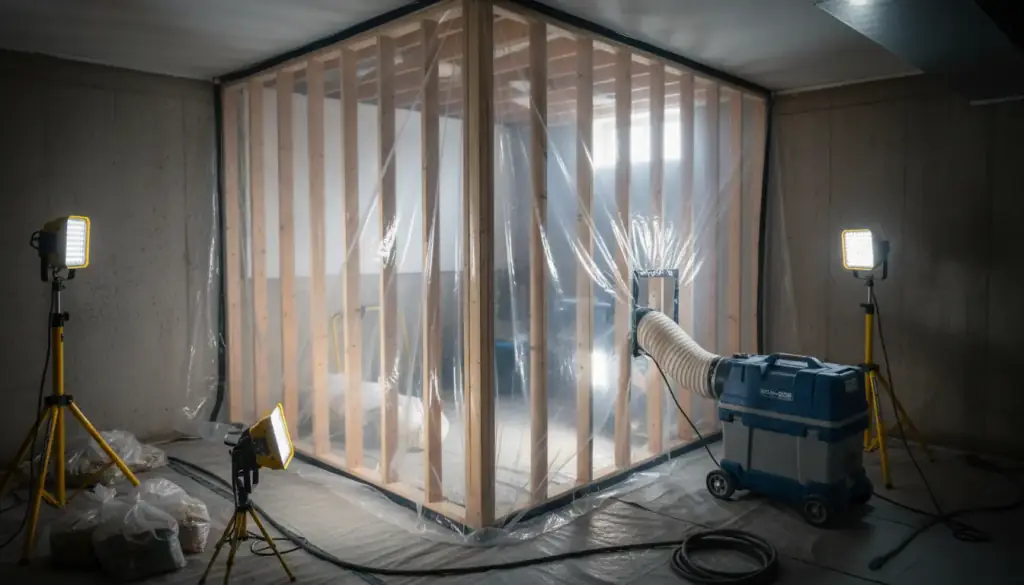
Proper work starts by sealing the area with plastic sheeting and a zippered door, so the work zone is separated from the rest of the house. Air scrubbers with HEPA filters run inside, and the space is held under negative pressure, so air flows into the work area instead of leaking out of it. Crews wear protective gear, bag contaminated material before it leaves the zone, and clean surfaces with HEPA vacuums and damp wiping instead of dry sweeping.
In practice, that's what you'll see on a mold job: a plastic-wrapped room, a loud machine vented outdoors, and workers suited up. It can look like overkill. It's what keeps the clean rooms clean.
Fix the water first, or the mold comes back
Removing growth without fixing the moisture source is a temporary result. A good crew finds the cause, makes sure the leak is repaired, dries the structure until the readings come back to normal, and only then restores finishes. Be wary of anything that only paints over the spot, sprays a coating on it, or bleaches the surface. Those can make a wall look better and leave the problem underneath.
Questions to ask before anyone starts work
- How will you contain the work area and protect the rest of my home?
- How do you decide which materials come out and which stay?
- How will you dry the structure, and how will you know it's dry?
- What happens if you open a wall and find more than you expected?
- What does my insurance say about mold? Coverage varies by policy and by cause, so ask your adjuster.
Kevin L. of Vernon had a pipe burst in his basement over the winter. His words: 'There was a lot to clean up with all the mold but they cleaned everything out so fast.' That's the part of the job worth asking about: how the cleanup is done, not only how quickly.
Strategic Source handles mold remediation with IICRC Certified Restoration Technicians, and estimates are always free. We work directly with your insurance. If you've smelled something musty or you've had water that never fully dried, call (201) 204-9700, any hour.
Strategic Source, (201) 204-9700
Call (201) 204-9700More articles
Burst Pipe or Flooded Basement: What to Do in the First Hour
The first sixty minutes decide how much of your home you keep, so here is the order to work in.
Hurricane and Storm Prep Tips for New Jersey Homeowners
A checklist you can finish in an afternoon, before the forecast turns.